
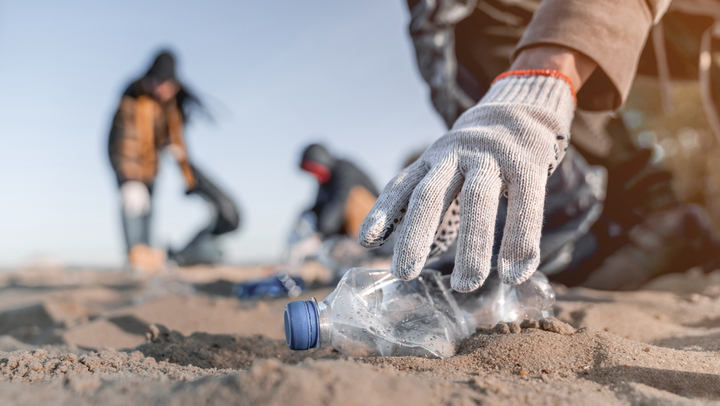
The Washington-based organization's report, summarizing the 2025 International Coastal Cleanup (ICC) campaign, found that volunteers collected more than 1.33 million plastic bottles and over 885,000 bottle caps, placing them first and third respectively on the list of most-collected debris. Held annually each September since 1986, ICC is described by Ocean Conservancy as the largest single-day beach and waterway cleanup in the world, drawing hundreds of thousands of volunteers across Africa, Asia, Australia and New Zealand, Europe, and North and South America.
Cigarette butts ranked second, with nearly 1.2 million collected. The remainder of the top 10 included metal beverage cans (840,000), multimaterial food wrappers (810,000), plastic grocery bags (580,000), other plastic bags (560,000), plastic food containers (510,000), plastic straws and stirrers (445,000), and paper cups and plates (415,000).
"I have spent nearly 15 years conducting hundreds of cleanups all over the world, and whether we're on the remote Alaskan coast or a tropical island hundreds of miles from land, we find bottles and caps at every cleanup," said Allison Schutes, Ocean Conservancy's senior director of conservation cleanups. "Most bottles are used for mere minutes and yet can last in the environment forever. Our communities, our ocean and our planet deserve better."
Anja Brandon, the organization's director of plastics policy, said the findings point to two underlying problems. "Plastic bottles are among the most recyclable items out there, which tells us two important truths: one is that we are making too much plastic, and two is that a lot of our waste isn't getting where it needs to go," she said, adding that expanding access to recycling — including bottle deposit return systems — and investing in reuse and refill infrastructure "would go a long way in protecting the ocean from this common type of plastic pollution."
Ocean Conservancy continues to advocate for bottle deposit return systems (DRS) and extended producer responsibility (EPR) programs, which it describes as among the most effective policies for reducing plastic bottle pollution.
Since the first ICC in 1986, Ocean Conservancy estimates that nearly 20 million volunteers have removed more than 200,000 tons of trash from beaches and waterways worldwide, with each collected item logged to build what the organization calls the world's largest database on marine debris.