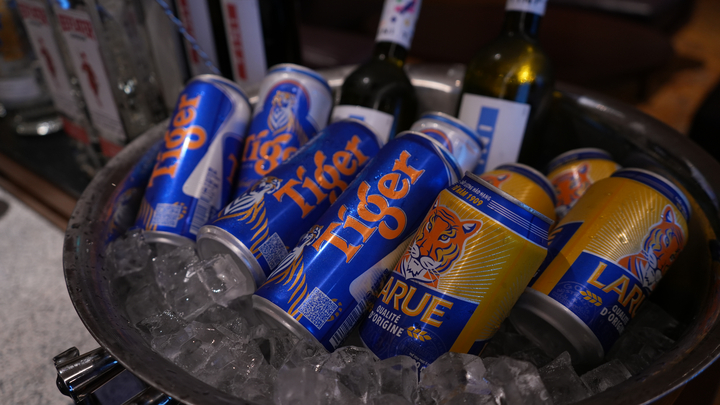
Tiger Beer is preparing to brew its final batches in Singapore, with production set to be progressively phased out by the end of 2027, bringing an end to almost a century of large-scale brewing in the city-state. Heineken-owned Asia Pacific Breweries Singapore is shifting to an import-based supply model, transferring production to existing breweries in Malaysia and Vietnam, a move first reported in March.
The restructuring will affect around 130 production workers at the company's Tuas brewery, including roughly 50 foreign employees. APBS employed around 530 people before the changes were announced, and some remaining staff are expected to move into redesigned roles.
For many departing employees, the closure represents more than the end of a production line. Senior technical officer Thomas Heng, 64, has worked at the brewery for more than four decades and is expected to retire in 2027 after 42 years with the company. He joined in 1984 as a tank cleaner after seeing a job advertisement in a Singaporean newspaper, later moving through roles in brewing, filtration and technical work. In 1993 he was sent to Ho Chi Minh City to help set up Tiger Beer's first production site in Vietnam, and in 2016 he worked on yeast propagation to support the brand's launch in Taiwan.
For packaging efficiency specialist Sathiswaran Kumarasamy, the brewery carries strong family ties. His father worked there for more than two decades as a senior utilities technician, and his elder brother spent 13 years in the packaging department. Sathiswaran, who joined the company a decade ago, ended up working alongside several of his father's close friends, recalling that he addressed some colleagues as "uncle" because of their long friendship with his father, even though it felt unusual to others. He said the relationships built at the brewery are what he will miss most once production ends.
Heineken announced the shift in March as part of its EverGreen 2030 strategy. Ageing brewing and packaging equipment at the Tuas facility was a key factor behind the decision, with the cost of replacing the machinery estimated to be comparable to building an entirely new brewery in Singapore. Rather than investing further in large-scale local production, Heineken will rely increasingly on its regional brewing network to supply the Singapore market.
The Tuas site itself will remain in use, with Heineken planning to redevelop it for regional logistics, innovation and other commercial activities, including a pilot brewery. Singapore will continue to serve as the global home of the Tiger Beer brand, with strategy, creative direction and research and development still based in the country.